Today's The Warmies fishing forecast looks quiet overall, though the best solunar period may still offer a short window of activity. With the moon overhead, denoting a major period, a short lift in fish feeding activity is possible. Mixed cloud cover; low inflience expected on fishing conditions.
No recent local reports are available. Showing fishing report activity across the wider region.
regional data
These reports reflect activity across the wider region, not just this location. Conditions and catches may vary locally.
Reports analysed
402
This year
162
This season
27
Species recorded
0
Broader regional report data is available, but no species in the displayed report summary currently match this location’s fishing report data.
Species most often mentioned in regional reports
A wide spread of species appears across Melbourne reports, led by Snapper, Garfish and Black Bream.
Regional reports can draw from several nearby waters, so the chart should be read as a broad guide.
Based on regional Getfished fishing report species data.
* Note that report summaries will sometimes display the same species under different names. This is because they are being reported that way. This is intentional.
Share of the displayed top 5 species recorded across the wider region, not only this location.
Regional bait trends
Bait turning up in reports
Plenty of different bait show up here, though pilchards, squid jig and worms still turn up regularly.
Worth staying flexible, because the reports are not all pointing one way.
Built from all-time reported bait mentions: 835 mentions across 17 distinct bait entries.
Share of the displayed top 5 bait recorded.
Plan your weekend at The Warmies
Get a seven-day fishing forecast by email each Thursday morning, with bite times, weather and tides where available.
What are today's best fishing times at The Warmies?
Today's sunrise is 6:26 am and sunset is 7:44 pm. As a general guide, the hour before and after sunrise and sunset are often among the most productive fishing periods. A minor solunar period overlaps the morning fishing period today. The sea-surface temperature is 18.5°C, which is generally more amenable to feeding activity.
Find out what we learned from analysing 20,000 fishing reports about moon times and fish.
Being a land-based location using berley is extremely important in order to bring the fish towards pier and you.
Autumn Fishing
Black Bream and Snapper are a good choice for anglers to target during autumn. With the water temperature dropping the pier provides an opportunity to concentrate on these species.
Winter Fishing
Black Bream, Mulloway, Snapper and Tailor are the species to focus on because Winter is when the water drops below 15c and this pier is no different. Fish can be slower to bite with reduced activity levels. As always what you catch varies with the prevalent temperature trends, localised weather and of course tides.
The Warmies Fishing
The Warmies is a land-based fishing area at Newport
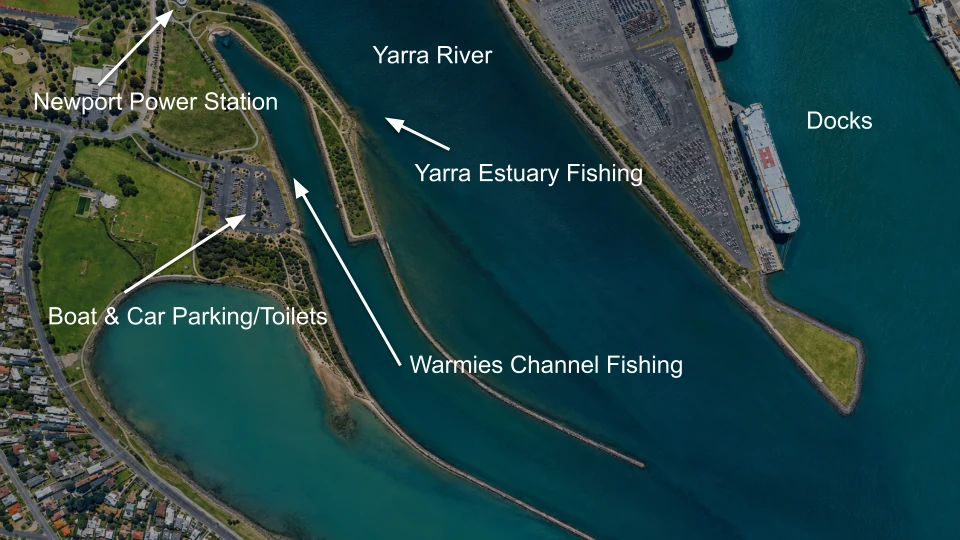
People often think of The Warmies as part of the Williamstown fishing scene since it’s close to the Williamstown boat ramp. Getting there is easy, whether you are driving or using public transport. There is a large car park if you arrive by car, and Newport train station is about a 15-minute walk away, with local buses also stopping nearby. Public toilets, parkland, and BBQs are nearby. Just keep in mind it can get crowded when the ramp and channel are busy. The fishing area covers the warm-water channel from the Newport power station outflow, and if you walk a bit west, you’ll reach the Yarra River estuary side of the spit, where a low rock wall lets you fish near the river mouth.
The main thing that sets this spot apart is the warm water that flows into the channel when the power station is running. This temperature change attracts fish, and you might see Australian salmon feeding on the surface when it happens. Tide changes matter too, since there aren’t many natural spots for fish to hide except for some submerged debris. Fishing in the morning or around high tide is usually best, while mulloway are more likely to bite at night. Spring and summer are good times to target snapper and flathead, which prefer warmer water.
This area isn’t a clean, snag-free estuary. Both the channel and the Yarra estuary side can easily snag your rigs, so bring extra tackle and try not to leave your bait where you see debris. The rocks along the estuary can be handy if the channel is crowded, but be careful on the gravel and rocks, and watch out for snakes near the spit. Because of the industrial history of the Yarra and Maribyrnong, it’s smart to practice catch-and-release. If you do decide to keep fish, make sure to follow the EPA’s safety guidelines. The EPA currently recommends limiting how much fish you eat from these waterways, especially larger or older fish, as they can accumulate more pollutants. They advise that smaller fish are generally safer than larger specimens, and you should avoid eating the fatty parts and always clean and cook your catch thoroughly. For the most up-to-date advice, check the EPA’s website before you keep fish.
A spinning rod between 7 and 9 feet works well here, and using a 10 to 20 lb mainline helps you handle snags, strong currents, and bigger fish like snapper and mulloway. Soft plastics and hard-body lures are great when salmon are feeding on the surface. For bait, pilchard, whitebait, pipi, prawn, squid, and sandworm all work well.
Because the area is quite snaggy, using rigs that minimise tackle loss is a good idea. A running sinker rig with a short trace can help your bait sit above the debris and reduce snags, while a paternoster rig with the lowest hook set a bit higher keeps your hooks away from the bottom. For lure fishing among rocks or structure, try rigging your soft plastics on weedless hooks to avoid getting caught. Bringing a few pre-tied anti-snag rigs is handy so you can get back to fishing quickly if you do lose gear.
Why Is It Called Fishing The Warmies or Hotties?
It’s called that because the water in the channel is warmer than in Port Phillip Bay or the Yarra Estuary.
Basically, the Newport power station pumps warm water into the channel, where it then passes through its turbines. When this happens, the water in the channel can go from as cold as 9 degrees up to a warm 22 degrees Celsius. Not surprisingly, fish are drawn to this warmer water.
Australian Salmon often feed aggressively in the channel, which is always exciting to see.
Besides smaller pinkies, anglers sometimes catch very large snapper and mulloway here.
That’s why the spot is called the Warmies, or sometimes the Hotties—the name comes from the warm water released by the power station after cooling its turbines.
Personally, I prefer fishing at the mouth of the Yarra River Estuary, which is just on the other side of the spit, rather than the outflow channel itself.
The Warmies Fishing Review
The Warmies is a popular Melbourne land-based fishing spot with plenty to offer. However, I suggest practising catch-and-release, since pollutants from past and sometimes recent spills can end up in the Yarra River and settle in the mud where fish feed.
There’s a large car park, public toilets, parkland, and BBQs, so the area is well equipped. It can get very crowded, so it’s important to be considerate of other anglers and not cast over lines already out there and crowd other folks out.
You can catch bream, mullet, and even mulloway here all year round.
Snapper show up during spring and summer.
Flathead are also more active and likely to bite during the warmer months.
In winter and spring, you can catch Australian salmon and tailor.
Some of the best fishing happens when you see smoke coming from the power station’s smokestack. That’s when warm water is flowing into the channel. This is where the old saying, “When the stacks a blowin’ I know where I’m goin’” comes from. The area used to be a busy factory district, and when the Newport Power Station started pumping warm water, locals knew it was time to fish.
If you’re after mulloway, night fishing gives you the best chance.
Fish the tide changes in general, as this channel is devoid of fish-friendly structures, beyond submerged debris. Now and then, anglers catch some impressive mulloway and snapper at the Warmies. Mulloway are powerful fish that can grow quite large, but they’re known for being tough to hook and land. land.
Warmies/Hotties Guide
Pr- Close and easy access from the city and western suburbs
Family-friendly, as long as children are closely supervised
Key family safety tips: Watch out for slippery rocks along the estuary and near the water’s edge, as they can be hazardous, especially for kids. Always keep an eye out for snakes near the spit and grassy areas. Strong currents and deep water are present in the channel and river, so make sure children stay a safe distance from the water. Consider life jackets for younger children if they are close to the water. Wear sturdy shoes to prevent slips and to protect against sharp rocks or debris.
Good variety of fish habitats and species
In the right conditions, you can go after big snapper
Big mulloway are sometimes caught, especially at night
Decent unisex toilets
Next to large parkland, so there’s plenty of space for kids to run around
Cons
Pollution is a real issue in these waterways
The EPA advises against eating large amounts of fish from here
Car Parking can be difficult during the Summer season as the boat ramp is extremely popular
The area can get crowded with anglers, especially when the power station is running. There are lots of snags, so bring extra rigs or be ready to tie new ones.
Warmies Pump Times
The Newport Power Station doesn’t run on a set schedule. It operates on demand, a system called the “Peaker Effect,” which means it starts up when electricity demand is high. Since it’s gas-fired and uses steam turbines, it can take a few hours to start producing electricity. There are some practical ways to improve your timing for visits: local anglers often keep an eye out for colder or windier days, late afternoons, or sudden temperature drops, which can increase electricity demand and prompt the power station to run. During really hot weather, when people use more air conditioning, the station also tends to fire up. One good sign to look for is smoke coming from the power station’s smokestack, as this usually signals that warm water is flowing into the channel. Asking at local tackle shops or watching for increased activity in the car park are also handy cues that conditions are right.
It usually starts up in the late afternoon or early evening, depending on how much electricity is needed. The station tends to run more often during peak times, especially in winter, when demand increases.
I have seen it running on warmer summer days, when air conditioner use is higher, too.
Can Getfished tell if fish are biting at The Warmies, today?
No. Because a forecast cannot truthfully guarantee whether fish are biting at a specific spot right now. Getfished shows the current fishing conditions instead: tide movement, solunar timing, weather, wind, pressure, marine conditions and fishing report derived species history.
Use this information to make informed decisions about where to fish, and to compare conditions across nearby locations. We hope you enjoy using Getfished to find your next great fishing spot!
The Warmies is a location within the region of:
Melbourne.
Rigmate - Fishing gear
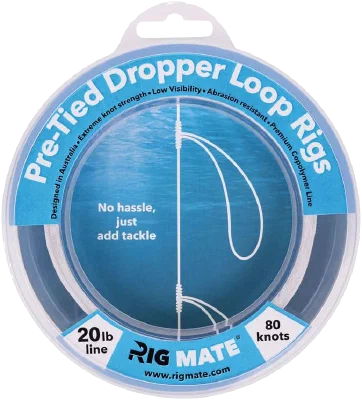
This product is one of my personal favourites. Rigmate is a versatile fishing rig DIY tool that lets you make your own rigs without tying complicated dropper knots. Saving time and frustration. Just spool off the number of loops you need and attach hooks and a sinker or berley cage. I usually allow an extra loop so I can just attach the whole rig to my snap swivel attached to my mainline.
The product is available in a range of line strengths from 5lb up to 1001lb. So it's great for a range of species, freshwater and saltwater. From paternoster rigs, running sinker and more.
Rigmate is available for purchase on Amazon. Click the affiliate button below to view the product and make a purchase. By using this link, you support Getfished at no additional cost to you.
Fishing report summaries are derived from Getfished’s structured fishing report database system. More information on this on how we collect and structure fishing report data can be found on our Fishing reports information.
Forecasts are based on the Getfished Meteorological and Solunar Forecasting System, which combines data from the BOM, and other sources. Our custom software systems use these inputs to establish solunar, tides and other forecasts for fishing conditions.
For more information on our systems and data sources please see our Datasources page. You can also Contact us for more information or details on commercial reuse.