Sun
12 Jul
55%
Activity
Moon Phase
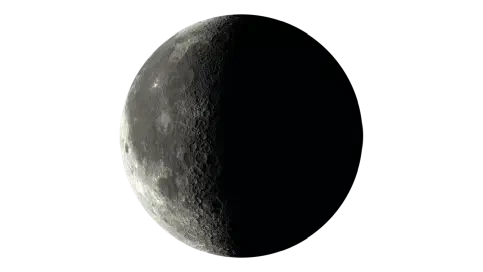
waning crescent
Moonrise
5:18am
Major Windows
8:55am – 10:55am
9:28pm – 11:28pm
Minor Windows
4:18am – 6:18am
1:31pm – 3:31pm
Solunar, Tides & Weather
Today is not a standout at The Warmies, but the better solunar windows are still worth trying out. Consider fishing during the major period when the moon is overhead; that time block may see improved fish activity today. Persistent drizzle; your comfort may be reduced at times.
Updated
Moon Phase
Waning Crescent
Estimated Fish Feeding Activity
55%
Fair conditions today with a 55% solunar confluence, with some opportunity there if you time the bite windows.
Daily Timing
The Warmies is sitting in the moderate range at 55%. The 1:31pm-3:31pm window may provide the best chance of activity.
Solunar Score Today
55% Potential Bite (Feeding) Intensity
Major 1
08:55 – 10:55
Centre · 09:55
Strength · 87.5%
Overhead transit major
Major 2
21:28 – 23:28
Centre · 22:28
Strength · 99.5%
Underfoot transit major
Minor 1
04:18 – 06:18
Centre · 05:18
Strength · 24.6%
Moonrise minor
Minor 2
13:31 – 15:31
Centre · 14:31
Strength · 34.4%
Moonset minor
7 Day Solunar Forecast
Compare daily bite activity, major feeding windows and moon conditions to help plan upcoming fishing sessions.
7 Day Tides
Weather
Conditions here can shift quickly through the day, so use this as the broad weather picture alongside the separate wind and pressure sections below.
Right now
Light Drizzle
11.6°C
Today
Maximum
12.5°C
Minimum
9.0°C
Rain
5.3 mm
Sun
12 Jul
Dense Drizzle
Range
9.0°C to 12.5°C
Rain
5.3 mm
Mon
13 Jul
Moderate Drizzle
Range
12.1°C to 15.7°C
Rain
1.6 mm
Tue
14 Jul
Light Drizzle
Range
10.5°C to 15.6°C
Rain
0.8 mm
Wed
15 Jul
Overcast
Range
8.3°C to 14.4°C
Rain
0.0 mm
Thu
16 Jul
Overcast
Range
8.8°C to 13.2°C
Rain
0.0 mm
Fri
17 Jul
Overcast
Range
6.4°C to 14.2°C
Rain
0.0 mm
Sat
18 Jul
Overcast
Range
6.2°C to 11.8°C
Rain
0.0 mm
Pressure
Pressure is most useful when it shows movement. A stable, rising, or falling trend can add context to the rest of today’s fishing forecast.
Right now
Interpretation
Pressure changes tend to matter more than the absolute value, especially when conditions are shifting.
Pressure is only one signal. Wind, tide, solunar timing, water movement, and local structure still matter.
Recent readings build the pressure trend used for interpretation.
Wind
Wind direction and strength can change how exposed a location feels, especially around open water, beaches, piers, and headlands.
Right now
Current speed
14.9 km/h
Direction
NW
Today max
29.2 km/h
Reading the wind
Wind direction and strength can affect comfort, casting, and exposure around this location.
Wind gusts can be stronger than the average wind speed, so it's worth checking the gust forecast if you're planning to fish from an exposed location or need to know about potential changes in conditions.
Even modest wind can affect comfort and casting, especially where the water is exposed.
The marker shows the current wind direction, while the daily outlook below shows whether conditions are likely to build or ease over the coming days.
Marine Conditions
Marine forecasts are guidance only. Conditions can change quickly on exposed water.
Current marine state
Current wave
0.30 m
Max wave
0.50 m
Wave period
2.85 s
Swell
0.26 m
Wind wave
0.36 m
Water temp
12.2 C
Marine interpretation
Wave conditions look relatively calm in the current marine data.
Marine caution
Moderate waves call for more margin, particularly in open or exposed water and smaller craft. Forecast wave heights are averages rather than peak conditions. Individual waves may exceed the forecast height at times. Wind and local chop can quickly affect comfort and control. Wave period around 5.00 s can influence how conditions feel on the water. Conditions in open water can change quickly, so keep checking throughout the session.
Water temperature
Water temperature is around 12.2 C, making immersion a more significant factor to plan for. Cool or cold water can affect grip, coordination, and swimming ability. Hypothermia is a real risk, particularly if you become immersed in the water. Wind and rough water can increase the impact of an accidental immersion.
Check local marine warnings, ramps, vessel limits and current conditions before heading out.
Fishing Reports
Recent catch activity for this location.
Reports analysed
6
This year
2
This season
1
Species mentioned
4
Reported species
A narrower spread of species shapes the reports for The Warmies, led by Black Bream, Tailor and Snapper.
The leading species here reflect report mentions for this location, not a complete catch survey.
Based on local Getfished fishing report species data.
* Note that report summaries will sometimes display the same species under different names. This is because they are being reported that way. This is intentional.
Share of the displayed top 4 species mentions for this location.
Pilchards and chicken are the first names showing up, but there's not much to go on yet.
Best treated as an early lead only.
Built from all-time reported bait mentions: 4 mentions across 2 distinct bait entries.
Share of the displayed top 2 bait mentions.
Often treated as part of the Williamstown fishing scene because it sits close to the Williamstown boat ramp. Access is straightforward, with a large car park, public toilets, parkland and BBQ facilities nearby, but the area can become very crowded when the ramp and channel are busy. The fishing area includes the warm-water channel from the Newport power station outflow and, a short walk west, the Yarra River estuary side of the spit, where a low rock wall gives access into the river mouth.
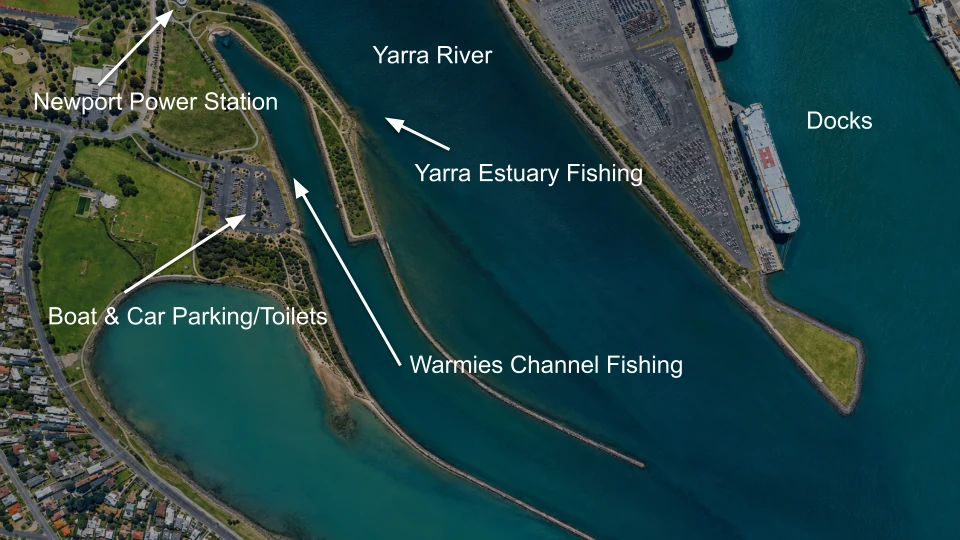
The defining feature is the warmer water that enters the channel when the power station is operating. That temperature change can draw fish into the channel, and surface activity from Australian salmon is worth watching for when it happens. Tide changes are also important because the channel has limited natural fish-holding structure apart from submerged debris. Morning sessions and the period around high tide can be worth prioritising, while mulloway are more of a night target. Spring and summer are useful periods for snapper and warmer-water flathead activity.
This is not a clean, snag-free estuary edge. Both the channel and the Yarra estuary side can claim rigs, so carry enough tackle to re-rig and avoid leaving baits sitting where debris is obvious. The estuary rocks can be useful when the channel is packed, but care is needed on gravel, rocks and edges, and snakes may be present around the spit. The industrial history of the Yarra and Maribyrnong means catch and release is a sensible approach. Fish consumption should stay within EPA-style cautionary advice.
A 7 to 9 foot spinning rod suits most fishing here, with 10 to 20 lb mainline giving useful margin around snags, current, larger snapper and mulloway. Soft plastics and hard-body lures are useful when salmon are busting up; pilchard, whitebait, pipi, prawn, squid and sandworm are all practical bait options.
Because the water in the channel is warmer than the water in Port Phillip Bay and the Yarra Estuary.
Essentially, the Newport power station pumps warm water, used to drive its turbines, into the channel via outflow pipes.
That is when the water in the channel rises from as low as 9 degrees to a tropical 22 degrees Celsius.
Unsurprisingly, the fish love this temperature!
In fact, bust-ups of Australian Salmon are pretty common, right inside the channel. Guaranteed to get the pulse pumping.
The fact is that beyond smaller Pinkies, some very large Snapper and Mulloway are caught on occasion.
So the name comes from the water temperature produced when the power station is pumping out water used to cool the turbines. Hence, the Warmies or as some folks know it, the Hotties.
My general preference is not so much the outflow channel of the Newport power station. But the mouth of the Yarra River Estuary is just on the other side of the spit.
The Warmies is a Melbourne land-based fishing hot-spot that has a lot to offer. But I recommend you catch and release. There are historical and occasionally recently released pollutants that reach the Yarra River, settling in the mud where fish feed.
There’s a large car park, public toilets, parkland and BBQ facilities. It’s pretty well serviced. It can also get incredibly overcrowded at times. So it’s important to be respectful of other anglers.
Take care not to cast over lines already out there and crowd other folks out.
Bream, Mullet and the mighty Mulloway can be caught all year round.
Snapper move in during Spring and Summer.
Flathead tends to bite more willingly at the Warmies during the warmer months too.
During the Winter and spring, Australian Salmon and Tailor can be caught.
Some of the best times to fish are when the smokestack at the power station is emitting smoke. That’s when the warmer water is flowing into the channel. This is where the old “When the stacks a blowin’ I know where I’m goin’” quote came from. The area was a real working close factory area. People lived and worked here, and the Newport Power Station pumping warm water was the signal for “fish on.”
Fishing at night is best if you’re targeting Mulloway.
Fish the tide changes in general, as this channel is devoid of fish-friendly structures, beyond submerged debris.
From time to time, some pretty impressive Mulloway and Snapper are taken at the Warmies.
Mulloway is a powerful fish, often growing large in size. Though notoriously challenging to hook and land.
-Close and easy access from the City & Western Suburbs
No. Because a forecast cannot truthfully guarantee whether fish are biting at a specific spot right now. Getfished shows the current fishing conditions instead: tide movement, solunar timing, weather, wind, pressure, marine conditions and fising report, derived, species history.
Use this information to make informed decisions about where to fish, and to compare conditions across nearby locations. We hope you enjoy using Getfished to find your next great fishing spot!
| The Warmies is also known by these names: | The hotties Yarra river mouth New port power station |
|---|---|
| Latitude | -37.8464899 |
| Longitude | 144.897136
View on Google Maps |
| Nearest city | Melbourne |
| Distance | 11.34 km |
| Platform | Land based |
| Bays | Port phillip bay |
| Rivers | Yarra river |
| Amenities | Boat ramp Boat trailer parking Car parking Toilets |
| Best Times | Dawn and dusk |
Nearby options
A small selection of other saltwater locations from the same region.
Fishing report summaries are derived from Getfished’s structured fishing report database system. More information on this on how we collect and structure fishing report data can be found on our Fishing reports information.
Forecasts are based on the Getfished Meteorological and Solunar Forecasting System, which combines data from the BOM, and other sources. Our custom software systems use these inputs to establish solunar, tides and other forecasts for fishing conditions.
For more information on our systems and data sources please see our Datasources page. You can also Contact us for more information or details on commercial reuse.

