Sun
12 Jul
55%
Activity
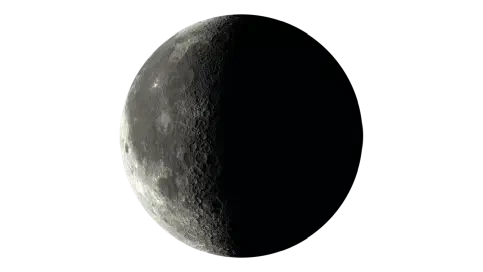
Moon Phase
waning crescent
Moonrise
5:19am
Major Windows
8:56am – 10:56am
9:29pm – 11:29pm
Minor Windows
4:19am – 6:19am
1:31pm – 3:31pm
Solunar, Tides & Weather
Fishing at Altona Pier looks mixed today, but the peak solunar bite times still provide a worthwhile opportunity. The overhead moon during the major period suggests an increased bite window. Persistent drizzle; your comfort may be reduced at times.
Updated
Moon Phase
Waning Crescent
Estimated Fish Feeding Activity
55%
Fair conditions today with a 55% solunar confluence, with some opportunity there if you time the bite windows.
Daily Timing
Altona Pier is sitting in the moderate range at 55%. The 1:31pm-3:31pm window may provide the best chance of activity.
Solunar Score Today
55% Potential Bite (Feeding) Intensity
Major 1
08:56 – 10:56
Centre · 09:56
Strength · 88.1%
Overhead transit major
Major 2
21:29 – 23:29
Centre · 22:29
Strength · 99.8%
Underfoot transit major
Minor 1
04:19 – 06:19
Centre · 05:19
Strength · 24.9%
Moonrise minor
Minor 2
13:31 – 15:31
Centre · 14:31
Strength · 34.6%
Moonset minor
7 Day Solunar Forecast
Compare daily bite activity, major feeding windows and moon conditions to help plan upcoming fishing sessions.
7 Day Tides
Weather
Conditions here can shift quickly through the day, so use this as the broad weather picture alongside the separate wind and pressure sections below.
Right now
Light Drizzle
10.5°C
Today
Maximum
12.7°C
Minimum
8.0°C
Rain
5.9 mm
Sun
12 Jul
Dense Drizzle
Range
8.0°C to 12.7°C
Rain
5.9 mm
Mon
13 Jul
Light Drizzle
Range
11.0°C to 15.9°C
Rain
1.1 mm
Tue
14 Jul
Light Drizzle
Range
9.1°C to 16.0°C
Rain
1.1 mm
Wed
15 Jul
Overcast
Range
6.4°C to 14.9°C
Rain
0.0 mm
Thu
16 Jul
Mainly Clear
Range
6.6°C to 14.1°C
Rain
0.0 mm
Fri
17 Jul
Overcast
Range
4.8°C to 14.5°C
Rain
0.0 mm
Sat
18 Jul
Overcast
Range
4.3°C to 11.7°C
Rain
0.0 mm
Pressure
Pressure is most useful when it shows movement. A stable, rising, or falling trend can add context to the rest of today’s fishing forecast.
Right now
Interpretation
Pressure changes tend to matter more than the absolute value, especially when conditions are shifting.
Pressure is only one signal. Wind, tide, solunar timing, water movement, and local structure still matter.
Recent readings build the pressure trend used for interpretation.
Wind
Wind direction and strength can change how exposed a location feels, especially around open water, beaches, piers, and headlands.
Right now
Current speed
16.0 km/h
Direction
NW
Today max
27.8 km/h
Reading the wind
Wind direction and strength can affect comfort, casting, and exposure around this location.
Wind gusts can be stronger than the average wind speed, so it's worth checking the gust forecast if you're planning to fish from an exposed location or need to know about potential changes in conditions.
Even modest wind can affect comfort and casting, especially where the water is exposed.
The marker shows the current wind direction, while the daily outlook below shows whether conditions are likely to build or ease over the coming days.
Marine Conditions
Marine forecasts are guidance only. Conditions can change quickly on exposed water.
Current marine state
Current wave
0.30 m
Max wave
0.50 m
Wave period
2.85 s
Swell
0.26 m
Wind wave
0.36 m
Water temp
12.2 C
Marine interpretation
Current marine conditions suggest a fairly manageable sea state.
Marine caution
Moderate waves call for more margin, particularly in open or exposed water and smaller craft. Forecast wave heights are averages rather than peak conditions. Individual waves may exceed the forecast height at times. Wind and local chop can quickly affect comfort and control. Wave period around 5.00 s can influence how conditions feel on the water. Conditions in open water can change quickly, so keep checking throughout the session.
Water temperature
Water temperature is around 12.2 C, making immersion a more significant factor to plan for. Cool or cold water can affect grip, coordination, and swimming ability. Hypothermia is a real risk, particularly if you become immersed in the water. Wind and rough water can increase the impact of an accidental immersion.
Check local marine warnings, ramps, vessel limits and current conditions before heading out.
Fishing Reports
Recent catch activity for this location.
Reports analysed
2
This year
2
This season
0
Species mentioned
4
Reported species
Altona Pier reports are led by Snapper, with Australian Salmon and Black Bream not far behind.
This summary is based on reports tied to this location and is intended to assist using the species chart.
Based on local Getfished fishing report species data.
* Note that report summaries will sometimes display the same species under different names. This is because they are being reported that way. This is intentional.
Share of the displayed top 4 species mentions for this location.
Pilchards set the pace here, while chicken and pipies also show up consistently.
It is a useful starting point, not a hard ranking.
Built from all-time reported bait mentions: 14 mentions across 3 distinct bait entries.
Share of the displayed top 3 bait mentions.
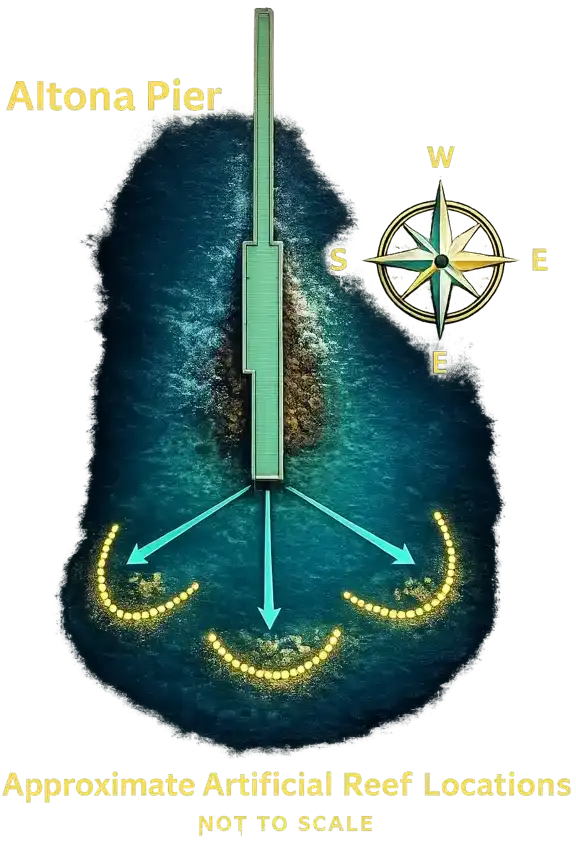
The end of the pier has the deepest water and is usually the best spot to fish when the tide is coming in. I’ve seen whiting feeding there, but they’re shy, so try to approach quietly, or they’ll swim away. Besides whiting, you can often catch snapper, flathead, bream, and sometimes squid near the end. Knowing which fish are around helps you pick the right gear and bait before you go.
To improve your chances with each species, use size 4-6 baitholder or long-shank hooks for whiting on a simple paternoster or running-sinker rig. For snapper, go with a 4/0 to 6/0 circle or octopus hook and either a running sinker or snapper rig. Flathead are best targeted with size 1 or 2 hooks and a running sinker rig. For bream, use size 2-4 hooks with a light running sinker. Squid are usually caught on medium-sized squid jigs, either on a simple rig or under a float. Matching your hook size and rig to the fish you’re after will help you get better results.
For whiting, use fresh pipis, small pieces of prawn, or worms. Snapper usually go for fresh squid or pilchards. Flathead often take whitebait, pilchard fillets, or soft plastics. Bream like prawns, mussels, chicken, or small hard-bodied lures. For squid, use a squid jig or a small whole fish. You can get fresh bait and tackle at Altona Bait & Tackle on Pier Street, just a short walk from the pier. Choosing the right bait for the fish you want to catch will increase your chances of success.
Altona Pier is a great spot for fishing, but it can get busy with swimmers and kids, especially in summer, which can make fishing a bit harder. For a quieter time, try going early in the morning or later in the evening when there are fewer people. Weekdays are usually less crowded than weekends. To avoid the main crowds, pick a spot along the side rails away from the swimming area, or head further down the pier toward the end where it’s usually quieter.
There are handy facilities nearby, like public toilets, cleaning tables for your catch, and shaded seating areas if you need a break or want to bring your family. These make it easier to plan a longer fishing trip or a family outing. The pier surface is smooth and flat, and the entrance is step-free, so it’s suitable for people with limited mobility and families with prams. There are ramps onto the pier, making access easier for wheelchairs and strollers.
One year, I set up at the very end of the pier, facing the artificial reef. That night, the temperature stayed above 25°C, and the day was over 40°C. Weather, especially temperature changes, can really affect how fish behave at the pier. On hot days and nights, fish are less active in the middle of the day and more likely to feed early in the morning or after sunset when the water cools down. Planning your trip for these cooler times can help you catch more fish. Some people who wanted to dive off the end told me there was a huge snapper halfway down the pier. It was obvious they just wanted me to move.
Here’s a quick summary:
The best fishing at Altona Pier is usually early in the morning or after sunset, especially on warm or hot days. Try to avoid fishing during the hottest part of the day, since fish are less active then. Check the weather forecast before you go and plan your trip for the cooler times of day for the best results. Even if you’re coming from the North Eastern suburbs, Altona Pier is still a great fishing spot and isn’t far from most West, North, and North Eastern suburbs. Depending on traffic, it usually takes about 30 to 45 minutes to drive from the city or inner suburbs.
There’s a public car park near the end of Pier Street, right by the pier, with free parking, but it can fill up quickly on weekends and in summer. Try to arrive early if you want a spot close by. Some nearby streets also have parking, but there may be time limits. Check Google Maps (satellite view) or Google Earth before you go. These tools help you find underwater features like artificial reefs, sandbanks, holes, and seagrass beds. The artificial reef is usually the best spot for snapper and whiting because it attracts lots of baitfish. Sandbanks and seagrass beds closer to shore are good for flathead and bream, especially when the tide is coming in. Holes and drop-offs along the pier can also hold bigger fish, so focusing on these spots can really help.
If you’re planning a longer session or need supplies, there are several cafes and food outlets near the pier, plus a bait shop within walking distance where you can get fresh bait and tackle.
If you want to fish at the artificial reef, use a rod about 10 to 12 feet long. A medium-action rod with a 4000-size spinning reel, spooled with 15 to 20-pound braid and a 15-pound fluorocarbon leader, works well. For bait, fresh pipis, prawns, and small pieces of squid are great for whiting and snapper. Soft plastics and small metal lures can also work if you want to try lure fishing. Bring a range of sinker sizes so you can adjust for the current and wind around the reef.
Before you start fishing, check the local fishing regulations. You’ll need a valid fishing license for Victoria, and there are size and bag limits for most species, like snapper, whiting, and bream. Here are the latest size and bag limits for some of the most popular species at Altona Pier:
Snapper: Minimum size 28 cm, daily bag limit 10 per person (only 3 fish may be equal to or greater than 40 cm).
King George Whiting: Minimum size 27 cm, daily bag limit 20 per person.
Bream: Minimum size 28 cm, daily bag limit 10 per person (includes combined total with other bream species).
Flathead (Dusky): Minimum size 30 cm, daily bag limit 5 per person.
Squid: No size limit, daily bag limit 10 per person for calamari.
Always double-check the current rules on the official Victorian Fisheries website before you go, since regulations can change. This helps you fish responsibly and avoid fines.
No. Because a forecast cannot truthfully guarantee whether fish are biting at a specific spot right now. Getfished shows the current fishing conditions instead: tide movement, solunar timing, weather, wind, pressure, marine conditions and fising report, derived, species history.
Use this information to make informed decisions about where to fish, and to compare conditions across nearby locations. We hope you enjoy using Getfished to find your next great fishing spot!
| Latitude | -37.8733 |
|---|---|
| Longitude | 144.8303
View on Google Maps |
| Nearest city | Melbourne |
| Distance | 17.97 km |
| Platform | Land based Piers |
| Bays | Port phillip bay |
| Amenities | Bbq Shops Toilets Parking Hotels |
| Best Times | Dawn and dusk |
Nearby options
A small selection of other saltwater locations from the same region.
Fishing report summaries are derived from Getfished’s structured fishing report database system. More information on this on how we collect and structure fishing report data can be found on our Fishing reports information.
Forecasts are based on the Getfished Meteorological and Solunar Forecasting System, which combines data from the BOM, and other sources. Our custom software systems use these inputs to establish solunar, tides and other forecasts for fishing conditions.
For more information on our systems and data sources please see our Datasources page. You can also Contact us for more information or details on commercial reuse.


