
Analysis: Over 3000 StumpJumper/Murray Cod Fishing Reports. Here’s What I Found
Share This Review
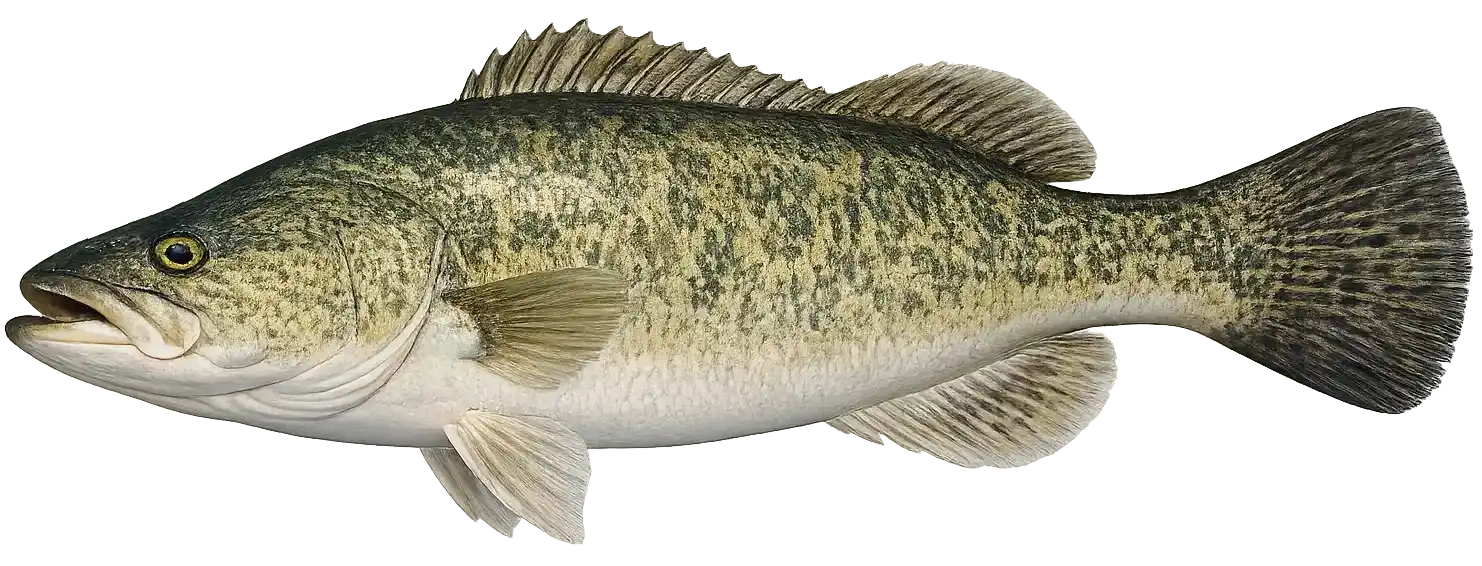
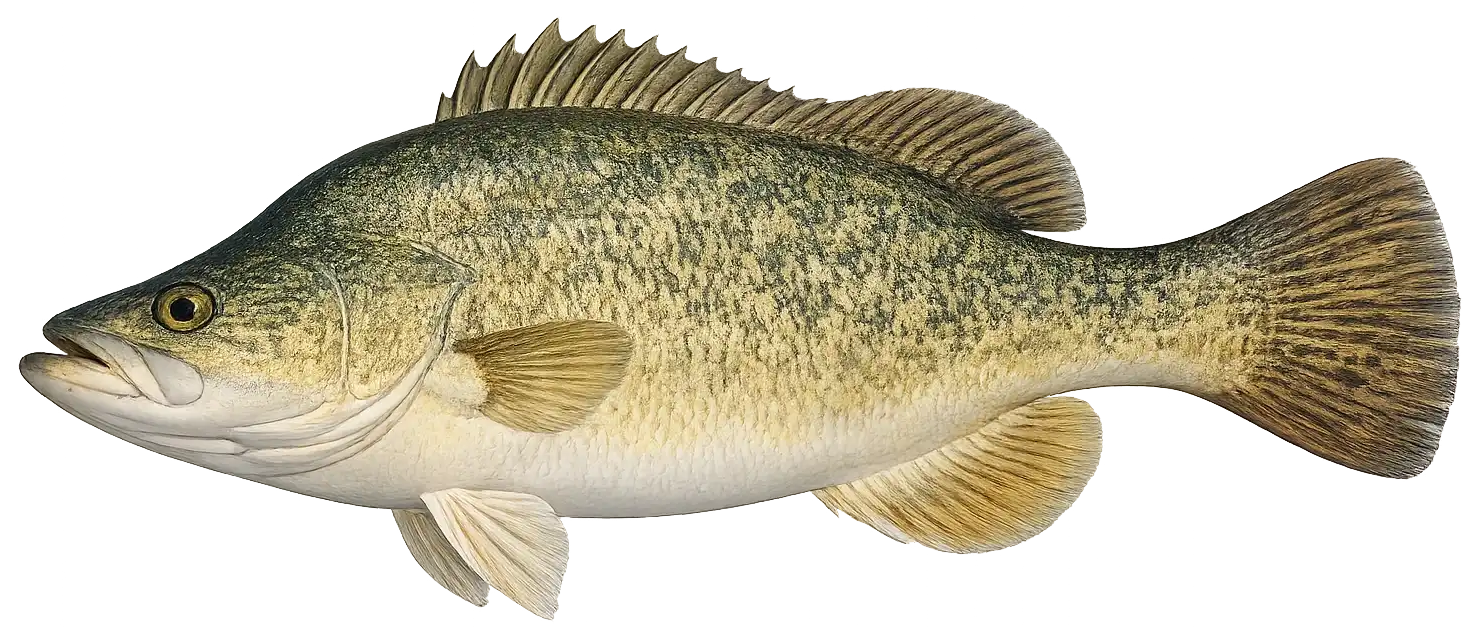
I analysed 3983 Yellowbelly and Murray Cod fishing reports to identify which lure and bait categories are most frequently referenced in reports from the past ten years.
Specifically, I compared the frequency of mentions for various lure and bait categories in Murray Cod and Yellowbelly fishing reports.
The analysis revealed several insights into the reported catches of Murray cod and yellowbelly, which may also be informative for readers.
Here is a Summary of What We Discovered:
StumpJumpers are used but constitute only a small proportion of reported catches, accounting for 0.5% for Murray cod and 0.4% for yellowbelly.
Soft plastics were also reported at low rates, with only 3.0% for Murray Cod and 8.2% for Yellowbelly.
Other lures, encompassing a range of types, accounted for a higher proportion: 51.3% for Murray Cod and 57.5% for Yellowbelly.
Bait, including earthworms, yabbies, freshwater shrimp, and similar options, accounted for 35.4% of Murray Cod catches and 47.9% of Yellowbelly catches.
StumpJumpers Have Been Used Since 1986
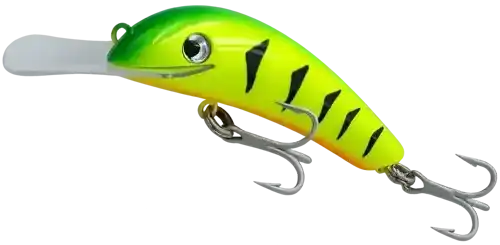
John Ellis created the prototype “StumpJumper” in 1986. So it’s a 40-year-old design that has received a lot of attention over the years. It features in YouTube videos and popular fishing magazines. It’s even appeared on TV.
The lure is designed to traverse over submerged stumps or branches, as its name suggests. Australian inland waterways contain numerous fallen trees and branches, which serve as habitat for native fish such as Murray Cod. Targeting these areas often results in snagged lures, leading to increased costs and frustration. The StumpJumper is engineered to deflect off obstacles and float to the surface, allowing anglers to retrieve it with a flick of the rod. Despite these design advantages, StumpJumpers remain underrepresented in the analysed reports.
The Report Findings Surprise Me
The relatively low number of StumpJumper reports was unexpected, considering the lure’s intended application, longevity, and Australian origins. Soft plastic lures from various brands performed slightly better but still represented a small proportion of reports. Spinner baits, Old Codgers, and Bassman lures were the most frequently reported.
But it was bait that really led the way, with various types of bait dominating at nearly 50% of the total.
The Issue With Collating Fishing Reports As a Source
🗝️Key Takeaway
Fishing reports inherently represent a sample of total catches, as they are submitted by a subset of anglers who are actively fishing and reporting their results.
Aggregating thousands of fishing reports does not provide a comprehensive representation of actual catch data. Rather, it reflects only what has been reported, which may not fully correspond to real-world outcomes.
This occurs because some anglers are more inclined to report their catches and experiences than others. Therefore, it is important to consider that the reports may reflect the practices of a specific subset of fishers rather than the broader angling community.
Consequently, these findings should be interpreted with caution.
Among anglers who submitted reports on Murray cod and yellowbelly, the data reveal a notable trend: StumpJumpers, which might be expected to be widely used, are in fact much less favoured.
Conclusion
It is common to make assumptions about effective fishing methods. While I have enjoyed using StumpJumpers to target Murray cod and Yellowbelly for decades, this does not necessarily indicate it is the optimal approach. StumpJumpers represent one option among many, and it is advisable to consider a variety of lures and bait when fishing. This aligns with my recent experience on the Murray River during a fishing club trip to Mildura. Few fish were caught aside from carp and turtles. I caught the only Yellowbelly of the day using live freshwater shrimp as bait, while StumpJumpers did not attract any fish.
Share This Review

Written by
Scott Kane
Founder, Getfished
Scott's a software developer and the founder of Getfished. He's a long-time recreational angler focused on practical fishing forecasts, fishing report data, and decision-support tools for Victorian anglers.
He has a background in complex software systems and data analysis. Scott has a penchant for building software using low level tools, developing products like Getfished in C, Pascal, SQLITE and Hugo.