Species report trend

Yellowbelly Fishing Reports

Macquaria ambigua

A report-based overview of where yellowbelly appears in Getfished fishing report data.

Freshwater

Share Your Latest Fishing Report

Help other anglers by sharing recent catches, bait, conditions, and what’s happening at your local fishing spots.

Share Yellowbelly fishing reports

Report patterns

Yellowbelly report signals

Derived from fishing report data

Bait and lure patterns

These percentages show the share of bait and lure mentions found in reports for this species. They reflect observed report patterns, not universal recommendations.

Reported bait

Scrub worms 12.3%
Yabbies 39.8%
Worms 26.2%
Shrimp 4.8%
Fresh shrimp 1.0%
Yabbies tails 0.1%
Yabby tails 0.4%
Bait 0.1%
Bardi grub 1.4%
Chicken 0.8%
Live/frozen shrimp 0.0%
Nathelia euro worms 0.0%

Reported lures

Jackall mask vibe 0.4%
Vibes 0.7%
Australian crafted 0.1%
Jackall doozer 0.2%
Medium diving hardbody lures 0.1%
Rmg 0.2%
Soft plastics 1.9%
Spinners 0.3%
Zx43 0.2%
#2 stumpjumper 0.0%
55mm codger p038 0.0%
70mm 0.0%

Seasonal report pattern

This shows when yellowbelly reports appear across Australian seasons. Shares are based only on reports with parseable dates.

Autumn and summer show the strongest reporting activity, with reduced reports during winter.

Note: seasonal patterns may be influenced by factors such as reporting bias, species behavior, and environmental conditions.

Summer 26.5%
Autumn 23.0%
Winter 13.6%
Spring 36.8%

Reported yellowbelly locations

These locations come from report records. Linked locations have matching Getfished location pages.

Lake Eildon

156

Reported in fishing data but not yet mapped to a Getfished location page.

Lake Eppalock

152

Bendigo

View location forecast and local fishing context.

Cairn Curran

116

Reported in fishing data but not yet mapped to a Getfished location page.

Lake Mulwala

110

Reported in fishing data but not yet mapped to a Getfished location page.

Campaspe River

105

Reported in fishing data but not yet mapped to a Getfished location page.

Broken River

104

Reported in fishing data but not yet mapped to a Getfished location page.

Lake Nillahcootie

104

Wangaratta

View location forecast and local fishing context.

Goulburn River

89

Reported in fishing data but not yet mapped to a Getfished location page.

Waranga Basin

82

Shepparton

View location forecast and local fishing context.

Lake Hume

79

Reported in fishing data but not yet mapped to a Getfished location page.

Loddon River

75

Reported in fishing data but not yet mapped to a Getfished location page.

Nagambie

56

Reported in fishing data but not yet mapped to a Getfished location page.

Shepparton

54

Reported in fishing data but not yet mapped to a Getfished location page.

Bridgewater

48

Bendigo

View location forecast and local fishing context.

Delatite Arm

42

Reported in fishing data but not yet mapped to a Getfished location page.

Serpentine

34

Bendigo

View location forecast and local fishing context.

Ovens River

32

Reported in fishing data but not yet mapped to a Getfished location page.

Main Eastern Channel

28

Reported in fishing data but not yet mapped to a Getfished location page.

Broken River Drive

24

Reported in fishing data but not yet mapped to a Getfished location page.

Kirwans Bridge

24

Reported in fishing data but not yet mapped to a Getfished location page.

Yellowbelly Fishing Guide
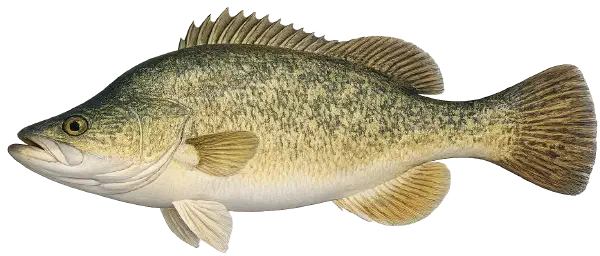
Yellowbelly, or golden perch, are native freshwater fish of inland Australian rivers, lakes, dams and impoundments, including Victorian Murray-Darling waters. The source presents them as warm-water structure fish that can be targeted with bait, hard bodies, soft plastics, vibes and spinnerbaits. They are often linked with timber, rocks, weed edges, steep banks, river bends and dam structure rather than open featureless water.

Fishing context is seasonal. Spring and summer are important periods, with fish using warmer shallows, timber, rocky areas and deeper bends depending on light and conditions. Shrimp and yabbies are important food items, and fish may sit deep when shut down or rise higher in the water column when warming or feeding. In Victoria and other inland states, flows, water clarity and local stocking or river rules affect access.

Tactics should match depth and cover. Hard bodies can be cast or trolled along rocky or wooded areas, with deeper divers useful on steep banks, dam edges and river bends. Small grub plastics can be slow-rolled beside standing timber, along weed edges or over warm shallow water. Vibes and blades suit deeper dam fish, while spinnerbaits and chatterbaits are useful search options around timber, rock and dirty water.

When fish are inactive, slow the presentation before leaving the area. Pauses beside timber, rocks or weed give a following golden perch time to commit, especially in cooler water.

Gear should handle snags without being excessive. Use line and leader strong enough for timber, rocks and bigger fish, and choose lure weight for depth, current and cover. Weedless rigging helps where plastics are fished into heavy structure. Yellowbelly rules vary by state and water, with size and bag limits applying in many places. Check Victorian or local inland regulations before fishing, especially around closed waters or stocked impoundments.

Bait anglers should focus on the same structure as lure anglers rather than treating yellowbelly as random open-water fish; shrimp and yabby patterns explain much of their positioning.

Check your local state fishing authority website for current yellowbelly size, bag and rule changes.

Explore more Fishing Reports.
Share Yellowbelly fishing reports

Yellowbelly is also known as:

Yellow Belly, Golden Perch, Callop, Goldens, Perch, Murray Perch, White Perch, Freshwater Bream, Tarki, Yellowfin Perch.