
Safe Wave Height – Boating Port Phillip & Western Port Bays
TL;DR
- Know your boat’s safe wave limit before heading out, especially on Port Phillip Bay or Western Port.
- Forecast wave heights are averages; actual wind and waves can be much higher.
- Smaller boats are far less forgiving: 1 metre can be dangerous or worse.
- Watch wind direction, because one side of the bay may be calm while the other is rough.
- Wear the right lifejacket and carry required safety gear, phone/radio and a PLB or EPIRB.
- Keep checking conditions while out and leave a wide safety margin.
Update June 2026
Understanding safe wave heights for your small boat is essential before heading out. Each year, incidents and capsizes occur on Port Phillip Bay, sometimes resulting in fatalities. This guide aims to help you assess conditions and make informed decisions before boating.
Note: This is a general guide to safe wave heights. Only you can assess how your specific boat handles. Always maintain a safety margin, as Port Phillip Bay is known for sudden weather changes and extreme conditions.
Note: This is a general guide to safe wave heights. Only you can assess how your specific boat handles. Always maintain a safety margin, as Port Phillip Bay is known for sudden weather changes and extreme conditions.
Ensure you carry all required safety gear in working condition. For details on legal safety equipment, refer to the provided resources.
Table Of Contents
Forecasted Safe Wave Height Caution
Beginners often underestimate safe wave heights:
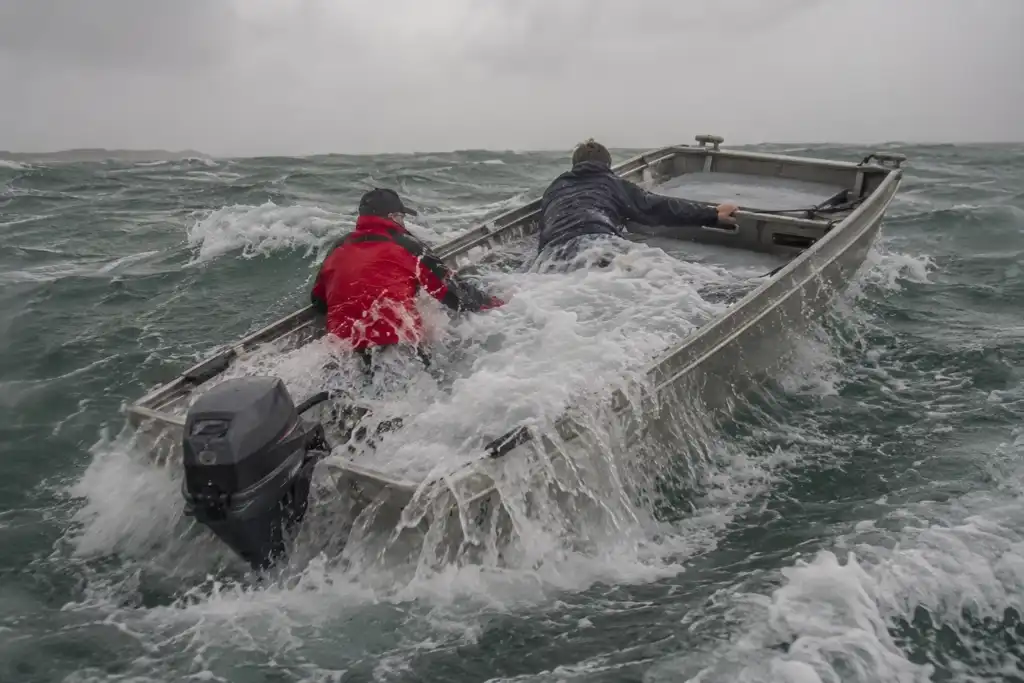
- A 1-meter wave can swamp a small boat.
- The distance between waves is critical too.
- Also always keep in mind that forecasted winds and waves are averages.
- Winds can be 40% higher than forecasted and wave heights will increase accordingly.
- Port Phillip Bay conditions can change suddenly, sometimes with little warning.
- Port Phillip Bay water temperature can kill, very quickly, between March & November.
- Minimize hypothermia risk. Dress for possible immersion and wear appropriately rated clothing. Avoid wool or cotton.
- Carry and monitor phone or radio for weather warnings.
- Carry an EPRB or PLB.
Attention!
Life Jackets – They Are the Law in all Australian states. Check with your state's boating authority for when & where you need to wear them.
Note: Wearing a properly rated lifejacket is mandatory on most small vessels. It is a legal requirement and essential for your safety.
If in Victoria, check the Victorian legal requirements to find out what your boat requires here.
Port Phillip Bay is more similar to a large, shallow lake than a traditional bay.
This is due to the very narrow neck (Port Phillip Heads) and the fact that it is a drowned estuary. The Yarra channel ran to the heads, by some accounts less than 8000 years ago—flooding possibly after a storm surge, damaging the area where the heads are now.
This is why it is both shallow and narrow at the entrance to the Bass Strait.
These conditions can make boating hazardous, so careful attention to forecasts is essential.
The shallow depth makes understanding and respecting safe wave heights critical. Western Port Bay can also become dangerous quickly.
Staying within recommended safe wave heights for your vessel is essential for safe boating and reducing risk.
Plan your trips using weather forecasts, select safe wave heights for your vessel, and monitor conditions regularly while boating. These steps are essential.
Boats 3.5m (12 feet)
At this wave height, you’re going to struggle. Operating a boat of this size will be challenging. Strong onshore winds will make returning to the ramp extremely difficult, and significant water may come on board. A boat of this size leaves no room for an unexpected peak wave that is common enough on Port Phillip Bay to be a concern.
This is NOT a safe wave height for this vessel.
Do not take unnecessary risks. Safety must always come first.
Reduce your speed significantly to maintain safety. Water may come on board at this height. Exercise extreme caution, as peak waves may exceed 1 meter.
This is NOT a safe wave height for this vessel.
Consider wind conditions, especially onshore winds, as these can make returning to the ramp more difficult.
Avoid these conditions. Instead, consider boating in estuaries, inland lakes, or streams.
At 0.5 meters, proceed at reduced speeds. Expect some hull impact. Wave height for this vessel.
Keep an eye out for strong onshore winds, as these can make returning to the ramp more difficult. to take a craft this size out on Port Phillip or Western Port Bay in these conditions.
Reduce your speed significantly to maintain safety. Water may come on board at this height. Exercise extreme caution, as peak waves may exceed 1 meter.
This is NOT a safe wave height for this vessel.
Consider wind conditions, especially onshore winds, as these can make returning to the ramp more difficult.
Avoid these conditions. Instead, consider boating in estuaries, inland lakes, or streams.
Waves will gently patter upon the hull. Water should not come on board. No spray should be present.
This should present comfortable conditions for a boat of this size.
This is considered to be a safe wave height for this vessel.
Monitor for weather changes and plan to be off the water before conditions deteriorate.
Wave heights can exceed forecasts, and conditions may change rapidly, sometimes within minutes. Remain vigilant and do not become complacent.
Boats 4.3m (14.1 feet)
Only highly experienced operators should consider taking a boat of this size out in these conditions.
Expect significant amounts of water to come aboard.
This is NOT a safe wave height for this vessel.
Proceed at minimal speed.
Reduce throttle and proceed slowly. Expect significant spray and water coming on board.
This is NOT a safe wave height for this vessel.
These conditions are hazardous for most recreational boaters.
Proceed at minimal speed.
Expect water and spray on the deck. Maintain reduced speed.
Keep an eye on the onshore winds.
This is NOT a safe wave height for this vessel.
These conditions are not suitable for inexperienced or occasional boaters.
You should keep your speed reduced.
Expect some hull impact.
Some spray may come aboard.
This is NOT considered a safe wave height for this vessel.
Good Conditions. Spray should be minimal, with only gentle water on the hull.
Spray shouldn’t be there to bother you, just a gentle patter of water on your hull.
This is good, reasonably comfortable conditions for a vessel this size.
This is considered a safe wave height for this vessel.
As always, keep an eye on the weather bulletins and updates.
Spray shouldn’t be there to bother you, just a gentle patter of water on your hull.
These are near-perfect conditions for boating.
Great to be out on your boat!
This is considered a safe wave height for this vessel.
Keep an eye on the weather updates; make sure no changes are expected.
Boats 5 metres (16.4 feet)
This is the upper limit for safe operation of a vessel of this size while maintaining passage. These conditions are hazardous for most recreational boaters—average boaties.
This is NOT a safe wave height for this vessel.
An experienced operator is recommended. Wave swells on Port Phillip Bay can exceed forecast averages.
Navigate each wave individually and maintain throttle control at all times.
Expect significant spray, and some waves may break over the deck.
This is NOT a safe wave height for this vessel.
An active eye on forecast bulletins is advised.
Maintain a slow speed.
Expect considerable spray and waves breaking over the deck.
This is NOT an ideal wave height for this vessel.
Operate at or below half-speed.
Expect some spray and water to come aboard.
This is NOT an ideal wave height for this vessel.
Keep alert and aware of forecast bulletins.
Keeping the speed down is best.
You will experience some moderate pounding. Maintain reduced speed. dered to be the MAXIMUM IDEAL safe wave height for this vessel.
Possibly some spray.
Set throttle to cruising speed.
Expect slight bumps.
This is considered to be a safe wave height for this vessel.
Most of the spray will be thrown clear.
Conditions are very comfortable.
These are near-perfect conditions.
This is considered to be a safe wave height for this vessel.
As always, keep an eye on forecast broadcasts.
Otherwise, enjoy smooth sailing!
Boats 6 metres (19 Feet)
Keep it slow and steady.
Recommended for experienced boaties only.
This is NOT a safe wave height for this vessel.
You’re going to get some water breaking onto the decks at times.
Keep the speed down.
Tackle waves individually.
You are going to cop a lot of spray.
There’s going to be water over your foredeck.
This is NOT considered a Safe Wave Height for this-sized vessel.
Keep the speed down.
Tackle waves individually.
Lots of Spray.
Water on your foredeck.
This is NOT considered a Safe Wave Height for this-sized vessel.
Slightly reduce your speed.
This is considered to be a safe wave height for this vessel.
As always, keep an eye on forecast broadcasts.
Slightly reduce your speed.
This is considered to be a safe wave height for this vessel.
As always, keep an eye on forecast broadcasts.
Keep speeds down.
Some pounding on your hull is going to be experienced.
This is considered to be a safe wave height for this vessel.
As always, keep an eye on forecast broadcasts.
Maximum cruising speed on your throttle.
You’ll probably experience some slight pounding on your hull.
This is considered to be a safe wave height for this vessel.
As always, keep an eye on forecast broadcasts.
Conditions are excellent.
Expect a smooth ride.
This is considered to be a safe wave height for this vessel.
Conditions are nearly calm.
The Wind Direction Plays A Role In Our Bays
Wind direction significantly affects conditions in Port Phillip and Western Port Bays.
For example, onshore winds from the west at locations such as Geelong or Werribee can reduce wave height. In contrast, the opposite side of the bay, including Mordialloc, Frankston, or Dromana, may experience choppier conditions at the same time.
This occurs because wind direction can either reduce or increase wave chop, depending on how it aligns with the bay.
Do not rely solely on wind direction. Always check and continuously monitor all conditions before and during your trip.
Download Wave Height Guide
Download Safety Fact Sheet
Lifejacket Videos
Safe Boat Wave Height Table
| Wave Height In Meters | Boats 3.5m (12 Feet) | Boats 4.3m (14.1 feet) | Boats 5m (16.4 feet) | Boats 6m (19 feet) |
|---|---|---|---|---|
| 2 Meters | NEVER | NEVER | NEVER | DANGEROUS |
| 1.8 Meters | NEVER | NEVER | NEVER | CAUTION |
| 1.5 Meters | NEVER | DANGEROUS | DANGEROUS | CAUTION |
| 1.2 Meters | NEVER | DANGEROUS | CAUTION | CAUTION |
| 1 Meters | DANGEROUS | CAUTION | CAUTION | SAFE |
| 0.8 Meters | DANGEROUS | CAUTION | SAFE | SAFE |
| 0.5 Meters | CAUTION | SAFE | SAFE | SAFE |
| 0.2 Meters | SAFE | SAFE | SAFE | SAFE |
Share this post

Written by
Scott Kane
Founder, Getfished
Scott's a software developer and the founder of Getfished. He's a long-time recreational angler focused on practical fishing forecasts, fishing report data, and decision-support tools for Victorian anglers.
He has a background in complex software systems and data analysis. Scott has a penchant for building software using low level tools, developing products like Getfished in C, Pascal, SQLITE and Hugo.