About Getfished: Fishing Times, Solunar & Tides
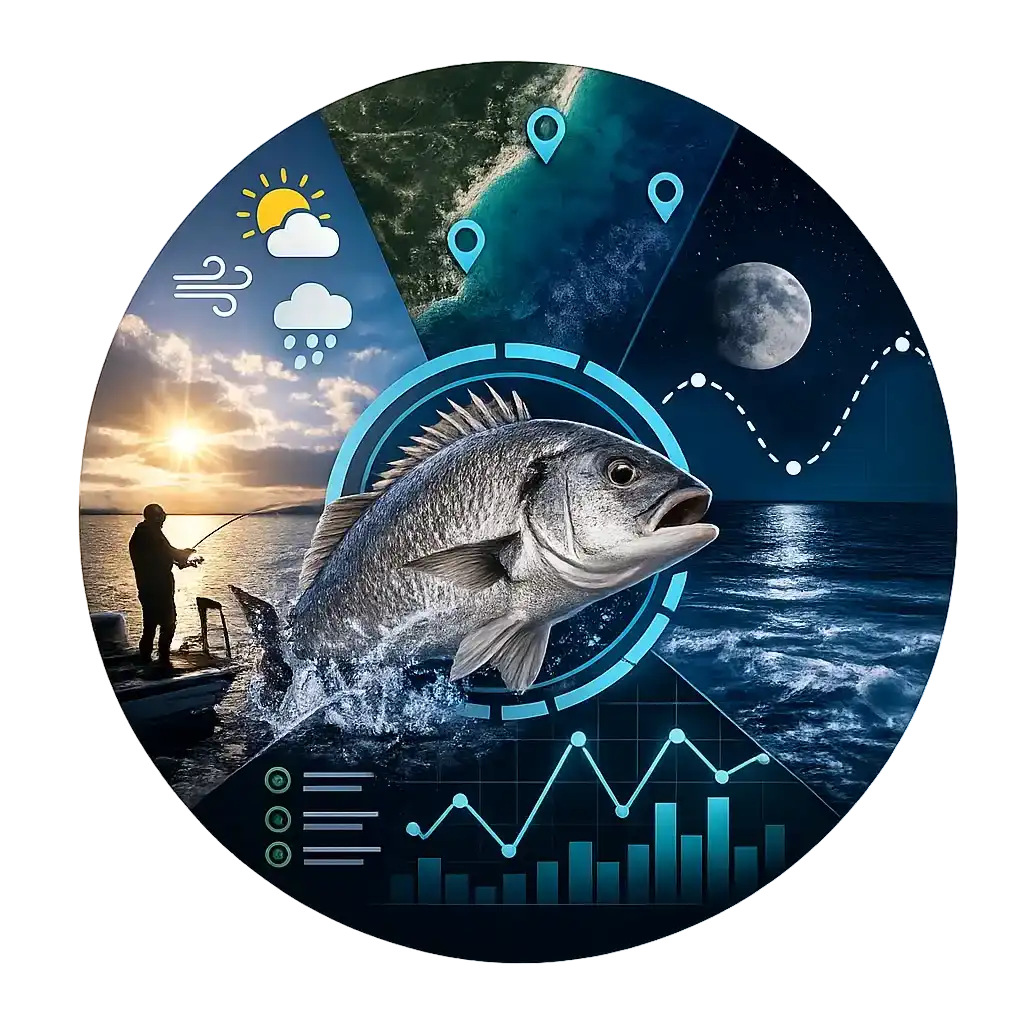
❝ Getfished looks at what’s being caught, where it’s happening, and when the conditions are right. We use real data to find patterns rather than relying on fishing stories or just one day’s results.
We collect data from sources such as BOM weather forecasts, local fishing reports, tide times, and Solunar theory. Combined, these give a full picture of the conditions and patterns that matter to fishers.
For more detail, see how Getfished forecasts are assembled from weather, tide, solunar and report signals.
We never depend on just one data source. Solunar theory, for example, is about probabilities, not promises. The best time to fish is when you can go. Use Getfished’s data as a helpful guide, not a strict rule.
This approach matters and shows the values behind everything on the Getfished website.
Fishing isn’t a mystery, but it can sometimes be tricky.
Getfished aims to helps you catch more fish, save time, and skip the guesswork.
We do this by focusing on three things that matter most:
- What’s being caught
- Where it’s being caught
- When it’s happening
This helps you make better choices when you’re out on the water. It is not, however, a guarantee. There are simply to many variables, the majority of which cannot be predicted.
A lot of fishing advice is about who caught the fish, why they think it worked, or their favorite method. These stories can be fun, but they’re often personal, inconsistent, and hard to use in other situations.
Getfished takes a different approach.
We’re not here to tell stories.
We’re here to find patterns.
Then present them to you for you to decide.
Observation over opinion
Getfished is built on a simple idea:
If something keeps happening in the same places, at similar times, and under similar conditions, it’s worth noticing.
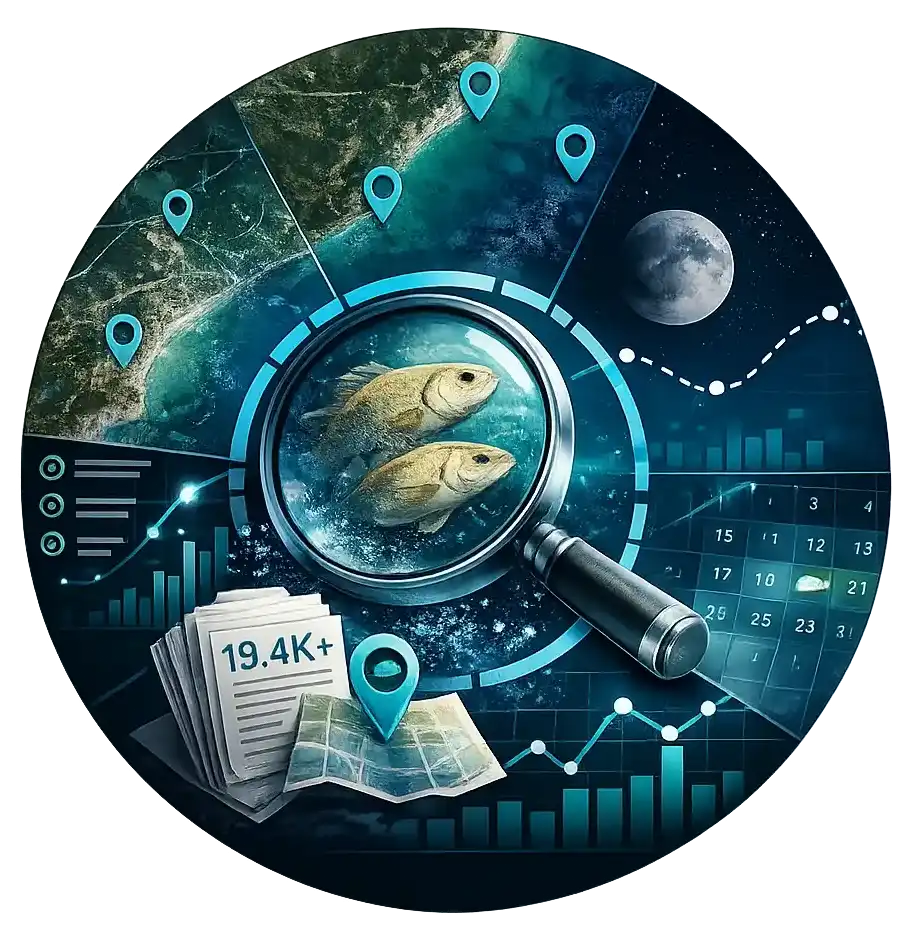
Instead of looking for perfect answers, we focus on what happened, where, and when. We use 70000+ fishing reports from more than 900+ locations, covering different seasons and conditions. This approach is based on a simple truth about fishing:
- Fish don’t follow rules.
- But they do respond to conditions.
So, instead:
We don’t aim to be right every time.
Our goal is to be helpful.
We try to help you make a decision, not make it for you.
Why “What, Where, When” matters
Many factors can affect your fishing results, such as tides, weather, seasons, moon phases, water conditions, and local geography.
By focusing on what, where, and when, Getfished lets patterns show up on their own instead of forcing explanations.
- What: shows the species present and the way they behave over time
- Where: shows activity from real places and environments
- When: highlights patterns connected to months, seasons, or the time of year
If you focus too much on who, why, or how, bias can creep in:
- Personal techniques
- Selective memory
- One-off conditions
- Stories told after the fact
Getfished does this intentionally.
Science-based, not belief-based
Getfished relies on observation, data, and consistency, not old stories or superstition.
We don’t depend on just one explanation for fishing success. Some people treat Solunar theory as the only answer, but we don’t.
Solunar influence is just one part of the puzzle. Sometimes it matters, and sometimes it doesn’t as much. Other times, different factors are more important, like:
- Wind and pressure changes
- Rainfall and freshwater flow
- Tidal movement and timing
- Seasonal and biological factors
- Local geography
- Food availability (or lack of)
- Pollution like sand dredging
- A large predator is in the area
Relying only on Solunar data might seem simple, but it rarely works by itself.
Getfished uses Solunar forecasts as background info, not as a rule. We always look at them together with other conditions.
Aggregates, not anecdotes
Individual fishing reports can be messy. They’re personal, depend on the situation, and often leave out details. Sometimes a catch is credited to a certain lure, but the real reason might be the tides, weather, or timing.
On their own, reports can be misleading, even if not intentionally so.
But when you combine them with other environmental data, they become much more useful.
Getfished brings reports together and finds patterns over time and across different conditions to give you useful insights.
We specifically consider:
- Trends rather than one-offs
- Frequencies rather than claims
- Patterns that last over time
This helps you avoid chasing yesterday’s success without knowing what’s happening today.
Built for fishers, not algorithms
Getfished isn’t here to impress you with fancy words or technology. It has one purpose:
To help you quickly spot patterns so you can make better choices.
If something doesn’t help you decide where to go, what to target, or when to fish, it doesn’t belong here. Everything else stays in the background.
A computer or the software running on it can’t do anything to gaurantee your fishing success. Despite bold claims on the Internet trying to sell you the opposite.
A note on experience
Getfished is built on decades of freshwater and saltwater fishing experience, along with years of software development and data analysis. Its perspective is informed — but not driven — by involvement in the angling community, including serving as 2025–2026 President of the Greensborough RSL Angling Club
Experience matters, but it doesn’t replace real evidence.
What Getfished is — and Isn’t
Getfished is:
- Based on curated Evidence
- Aware of different Locations
- Incorporates seasonally different data
- Employs practical decisions
Getfished is not:
- A prediction engine that guarantees
- A collection of fishing stories
- A platform built around personalities or opinions
Fishing will always have some uncertainty. That’s why it’s called “fishing” and not “catching.”
Getfished is here to help reduce that uncertainty, not to pretend you can replace experience.
Join other fishers who use Getfished for clearer insights and better choices on the water.
Getfished Founder and Lead Developer
Getfished was created by an Australian software developer and long-time recreational fisher: Scott Kane Developer and Author Details.